
Beyond Free Education: Rebuilding the Village!
By Japolo
Having served in Kenya’s education sector for over 20 years, especially in underserved rural areas and urban slums, I have learned one unshakable truth: there is no such thing as free education.
Yes, we call it “free,” but someone always pays. In Kenya, that “someone” includes the taxpayer, teachers who sacrifice beyond the call of duty, struggling parents who cover silent costs, and international donors whose support is rarely acknowledged.
In fact, according to recent education financing reports, donor contributions still fund over 25% of non-salary education expenditures in some counties, particularly in urban informal settlements like Mathare and Kibera, or in rural counties such as Turkana, West Pokot, and Garissa. These funds cover school meals, learning materials, girl-child support, teacher training, mentorship programs, and even sanitary products. Without this external funding, millions of vulnerable children would never step into a classroom, let alone complete school.
But by calling it “free,” we send the wrong message. The word suggests disconnection. It suggests that parents can opt out, that the community bears no role, and that the state carries the entire weight. I have seen firsthand how this language erodes responsibility: parents disengage, school boards weaken, and accountability disappears.
We must name the problem accurately. What we provide is not free, it is publicly funded and often donor-supported, but it must be locally owned. What we need is not a passive system, but a partnership. I call this Elimu Kwa Wajibu —Education with Responsibility.
For years, I have worked as an education support services provider in Kenya’s hardest-to-reach communities. I have served in school boards, sat in school compounds built by missions, run mentorship programs in makeshift classrooms, and witnessed the heartbreak of learners dropping out because the “free” system failed to account for their lived realities. These experiences have shaped my firm belief: education is not just about providing textbooks or buildings, it is about nurturing a generation of leaders with resilience, purpose, and character.
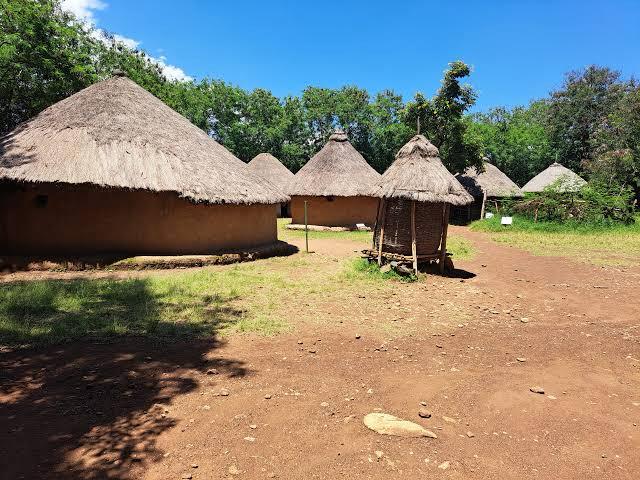
Our African ancestors taught us that “it takes a village to raise a child.” But today, our village is fragmented. The spiritual, moral, and emotional scaffolding around the learner is crumbling. And we see the results: children who may pass exams but are unprepared for life, leadership, or service.
Frederick Douglass once said, “It is easier to train strong children than to repair broken men.” Our current model does neither well. We pour money into access, but neglect formation. We focus on enrollment, but not mentorship. We emphasize curriculum, but not character.
It doesn’t have to be this way.
We can build a better system, one where communities co-own schools, budgets are transparent, and every child is surrounded by champions. That begins with four key shifts:
• Devolve oversight to counties so education is governed by people who understand local needs.
• Empower local school boards to ensure real-time accountability, not just to the ministry, but to parents and neighborhoods.
• Demand transparency in budgeting so any Kenyan can verify how funds are spent.
• Re-engage parents, churches, and regional groups to offer spiritual nourishment, mentorship, and discipleship. Because true education is not just academic, it is holistic. It prepares the heart, shapes the conscience, and builds the kind of leadership this nation desperately needs.
When mentorship is missing, talent gets wasted. But when every child has someone who believes in them, walks alongside them, and affirms their purpose, something powerful happens: transformation takes root. I have witnessed it firsthand, young people from Mathare becoming engineers, students from Baringo rising as lawyers, others from Kakamega and Homa Bay becoming teachers, youth from Kisumu serving as police officers and marine engineers, and those from Murang’a becoming doctors and social entrepreneurs. Their success wasn’t just because someone paid their fees; but it was also shaped by mentors who guided them through life’s pivotal decisions.
So let’s stop calling it “free education.” Let’s tell the truth: it is education with Responsibility, supported by public and donor funds, sustained by local ownership, and driven by mentorship.
Let’s raise strong children, so we don’t spend generations and scarce resources trying to repair broken men and women.
Let’s restore the parent, the teacher, the pastor, and the neighbor to their rightful place in the child’s story.
Let’s rebuild the village, because when the village returns, the children rise.